
Public Sector Solutions, Homelessness & Housing
The evidence on addressing homelessness already exists. What determines outcomes is execution, which is why Social Finance’s decade of work with Continuums of Care, states, and counties has focused on outcomes-based contracts and policy implementation that help public dollars actually deliver for the people they’re meant to serve.
Homelessness touches every community, urban, suburban, and rural. And most communities already know what solutions the evidence suggests. Housing First, permanent supportive housing, rapid rehousing: the research is not the bottleneck. The bottleneck is whether providers can deliver it, whether people can get in the door, and whether anyone notices in time when it is not working. So the question we keep coming back to with our partners is a narrower one: What have we actually seen work, for whom, and under what conditions?
A promising approach needs providers who can deliver it, housing and supports people can access, and a way to recognize when something needs to change. Those details shape whether people get housed and are able to stay housed.
Over the past decade, we’ve helped communities develop outcomes-based contracts for supportive housing, supported Continuums of Care in improving their local homelessness response systems, and worked with states and counties to put new policies into practice. This work reflects a broader focus at Social Finance: helping public dollars support better outcomes for the people they are intended to serve.
Access to affordable housing underlies all of this. In Delaware, our assessment for Delaware Health and Social Services identified a severe shortage of affordable homes, particularly for families. Our role was to help the state understand the needs and funding gaps. Expanding housing supply is the work of a much broader field, and it remains a constraint that better program design alone cannot resolve.
Within those constraints, we have learned a great deal about how communities can improve their response. Five themes come up most often. The examples below come from our work in Anchorage, Austin, Clackamas County, and Delaware.
For people who have experienced prolonged homelessness and have significant health or behavioral health needs, moving into housing is the beginning of a longer period of support. Case management and access to care can help people address challenges that continue after move-in. Programs need to plan and budget for that support from the start, with room to adjust as people’s needs change.
Housing First is an approach that prioritizes access to housing without requiring sobriety or participation in services as a condition of entry. It can guide different program models, including permanent supportive housing and rapid rehousing. In practice, entry requirements determine who a program can reach. Requiring someone to address substance use before accessing housing, for example, can exclude people the program was designed to serve.
Providers need the staffing and resources to respond when someone is struggling to maintain a tenancy. Evidence can inform the initial design, but communities still need to examine who is being served, who is waiting, and what happens after people move in. A commitment to Housing First should include a willingness to address problems in how the program is operating locally.
People experiencing homelessness often interact with housing, health care, and public safety systems that have different responsibilities and funding sources. Coordination is more useful when partners agree on how referrals will work, what information they can share, and who is responsible for resolving a problem that crosses agency boundaries.
A report has limited value if it arrives too late to change how services are delivered. In our work, we’ve found that partners need both timely access to information and a regular opportunity to discuss what it means. When a measure changes, the next step is to understand why and decide whether to act.
Performance measures tell you that something is going wrong. Participants can tell you why. Their experience can help a team understand whether services are accessible and whether proposed changes would address the problems participants face.
These experiences have made us more specific about the questions we ask with our partners. Can people access the housing and support being offered? Where are they getting stuck? What can the team change, and how will we know whether it helped? Following through on those questions is a substantial part of improving a homelessness response, and it is where we continue to focus our work.


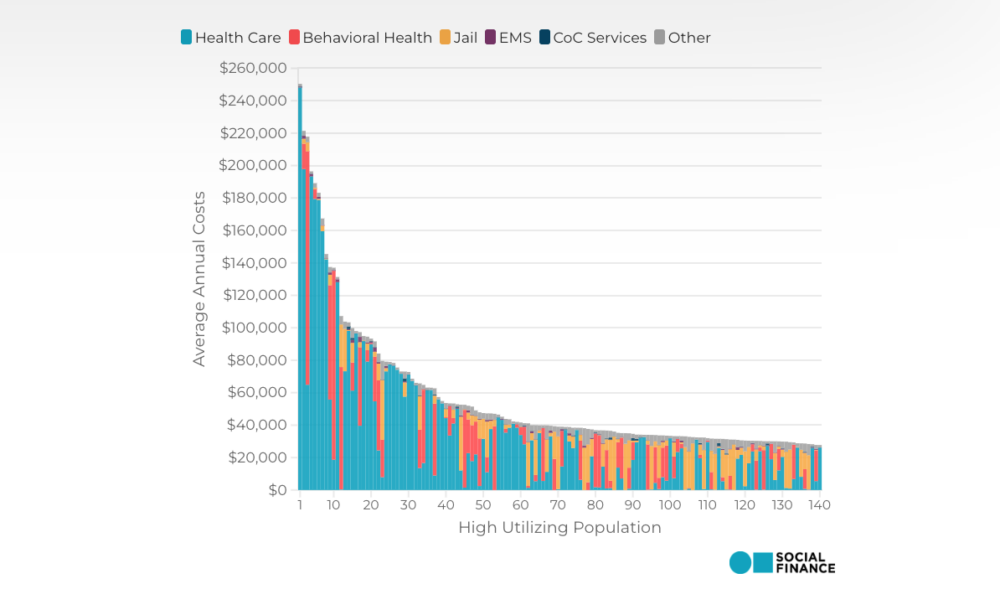
The costs of persistent homelessness are high—not only to the County, but to the health and wellbeing of individuals experiencing homelessness as well. This analysis attempts to measure the dollars and cents associated with the…